Google vs business directories — this is one of the most common questions small business owners ask when they first start building their online presence. Should you focus all your energy on Google? Or do business directories actually send more customers your way? The honest answer might surprise you, and understanding it could change the way you approach your entire local marketing strategy.
The good news is that you do not have to choose. This article breaks down exactly what each platform does, how they work together, and which one deserves your attention first — so you can stop guessing and start growing.
| Business Directories | |
|---|---|
| 8.5 billion daily searches | Targeted, high-intent audiences |
| Local Pack + Google Maps visibility | Build NAP citations for Google |
| Highest raw traffic volume | Multiple discovery points |
| Pulls data from external directories | Higher lead quality and conversion |
| Requires verification to claim | Most are completely free to join |
What Google Does for Your Business
Google is without question the most powerful search engine on the planet. When someone searches for a service in their city, Google instantly scans billions of web pages and business profiles to deliver the most relevant results. Google Business Profile — Google's free business listing tool — allows your business to appear directly in search results and on Google Maps without the customer even needing to visit your website first.
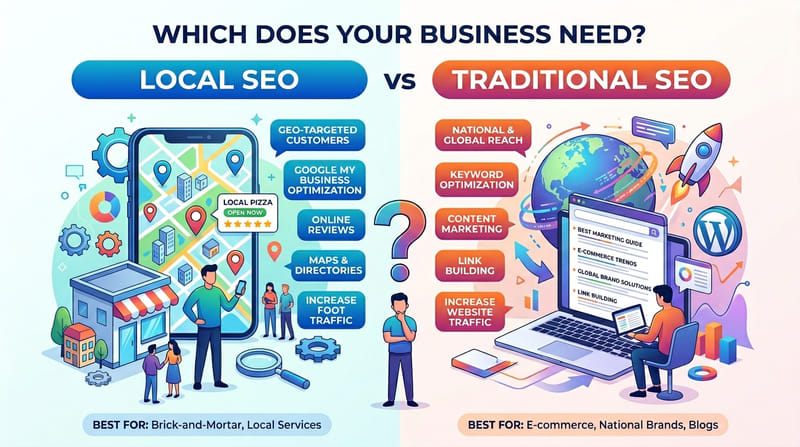
However, here is something most business owners do not realize. Google does not work alone. Specifically, Google pulls data from dozens of external sources including business directories to verify that your business information is accurate and trustworthy. Therefore, your Google ranking is directly influenced by how well your business performs across other platforms. As explained in local SEO for small businesses, Google's local ranking algorithm considers three main factors — relevance, distance, and prominence. Business directories play a major role in building that prominence score, which is exactly why ignoring them is such a costly mistake.
What Business Directories Do That Google Cannot
Business directories serve a fundamentally different purpose than Google, and in many ways they do things Google simply cannot do on its own. Understanding these differences is the key to building a local marketing strategy that actually works consistently.
Targeted Visibility With Ready-to-Buy Customers
When your business appears on a reputable directory, the people browsing that platform are already specifically looking for what you offer. The traffic you receive from directories converts into actual paying customers at a significantly higher rate than broad Google search traffic from people still in the research phase.
Citations That Directly Strengthen Your Google Rankings
Every directory listing that includes your business name, address, and phone number creates a citation — one of the most powerful signals Google uses to determine how prominently to rank your business in local search results. As explained in why NAP consistency matters for local rankings, consistent citations across reputable directories compound your Google authority without any additional effort from you month after month.
Multiple Independent Discovery Points Across the Web
Instead of relying solely on one platform, your business becomes visible across dozens of websites simultaneously. Each directory listing acts as an independent doorway through which new customers can find and contact you directly. And as shown in the top 10 benefits of listing your business in online directories, this multi-platform presence builds compounding brand recognition that no single platform alone can replicate.
Higher Lead Quality That Converts at Better Rates
Customers who discover a business through a niche or local directory are often further along in their buying decision than people running a broad Google search. That is why, while Google sends more traffic overall, business directories tend to send better-qualified leads.
Google vs Business Directories — What the Numbers Actually Show
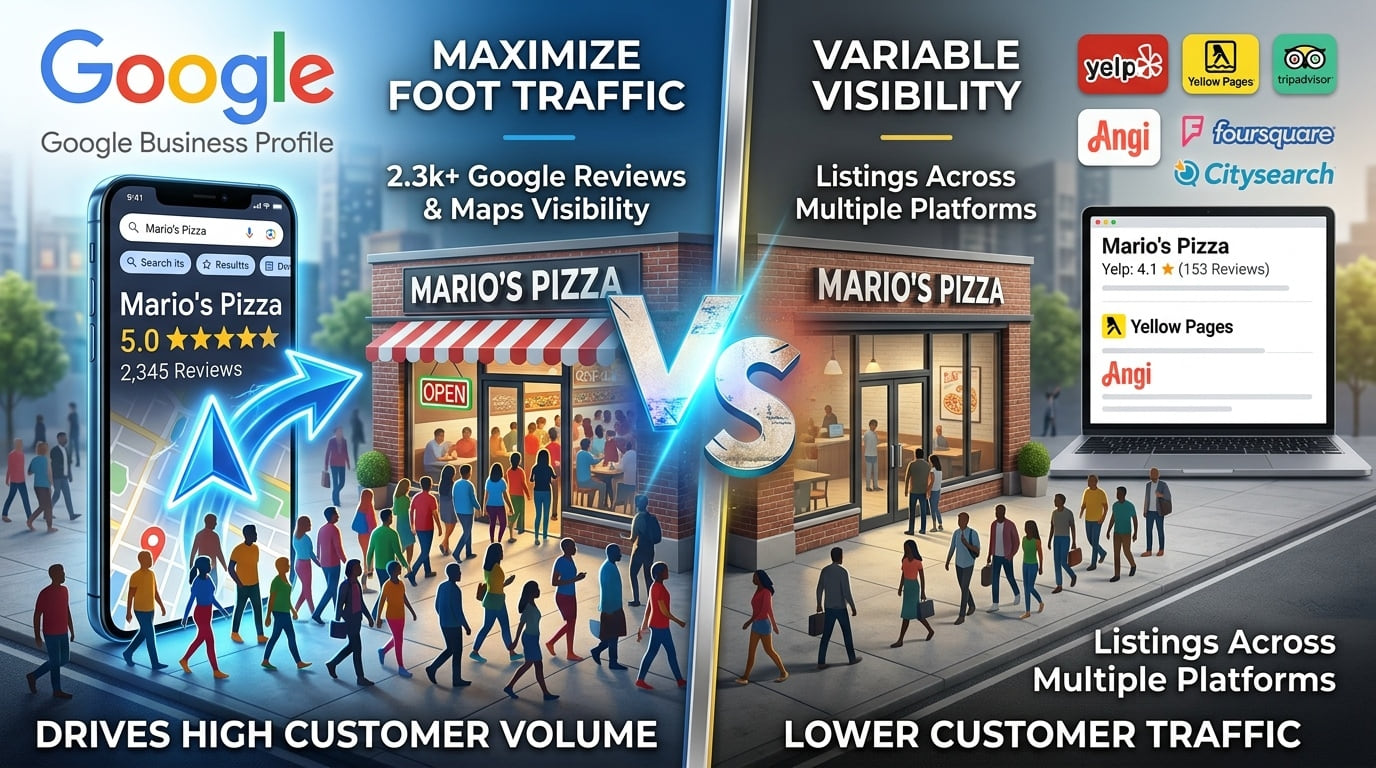
When comparing Google vs business directories in terms of raw traffic volume, Google wins without question. However, volume alone does not determine which platform sends more valuable customers to your door. The businesses winning at local search in 2026 are not focused on traffic volume — they are focused on traffic quality and total online authority.
Consider this reality: businesses listed across multiple directories consistently rank higher on Google itself. As covered in the complete guide to what a business directory is, every directory listing strengthens your overall online authority — which directly improves your Google rankings at the same time. So in reality, the two platforms are not competing against each other at all. They are working together every day to bring your business more customers.
Which Platform Should You Focus on First?
The answer to the Google vs business directories debate is not either-or — it is both, used strategically together. If you are just getting started and need to prioritize, here is the recommended order to follow for the fastest results.
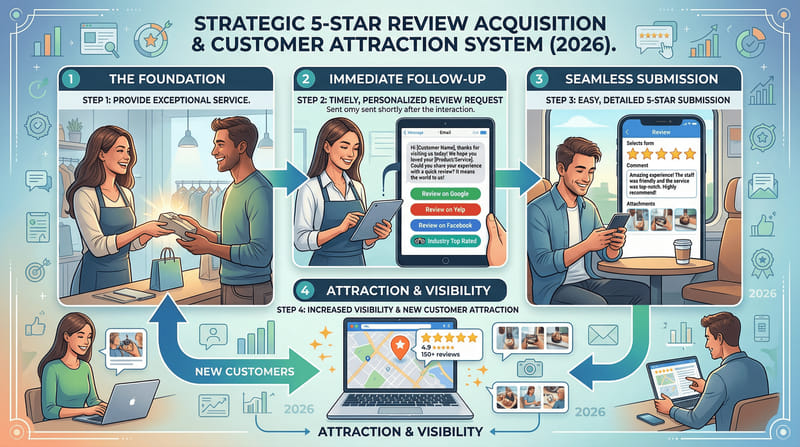
- Start with Google Business Profile: Claim your listing, fill out every field completely, add high-quality photos, and start collecting reviews. This single step has the most immediate impact on your local visibility because Google favors its own platform in search results.
- Add your listing to Listings Junkie: Create your free listing here — a dedicated USA directory built specifically to help American businesses get found online. It takes under 10 minutes and goes live as soon as it is approved.
- Work through the top directories in your industry: Use the 10 best business listing sites in 2026 as your roadmap and get listed on every relevant platform over the following weeks.
- Fix your NAP consistency across all platforms: Make sure your business name, address, and phone number are identical everywhere. As explained in why NAP consistency matters, this consistency turns individual listings into one powerful unified signal that Google cannot ignore.
- Keep both platforms active and updated: Respond to reviews, post updates on Google, add photos regularly, and keep all listing information current. Active listings consistently outperform inactive ones regardless of which platform you are on.
The Real Winner in Google vs Business Directories
The businesses winning at local search right now are not choosing between Google and business directories. Instead, they are using both platforms as parts of one connected strategy. They understand that every directory listing they create makes their Google ranking stronger — and every improvement in their Google ranking brings more people to their directory listings too.
So stop thinking about Google vs business directories as a competition. Start thinking about them as partners working together to bring your business more customers every single day. As shown in how listing your business drives real growth, businesses that combine both platforms consistently outgrow those that rely on just one. Follow the complete business listing checklist to make sure every element of your combined strategy is properly in place from the very beginning.
List your business for free
Create a verified listing on Listings Junkie and give the customers in your area one more place to find your business name, address, phone and website.