The Google Local Pack is the most valuable piece of real estate in local search. It is the map with three business listings that appears at the top of Google results when someone searches "plumber near me" or "best cafe in your city." Businesses in the Local Pack receive the majority of clicks — often more than all other results combined. Getting your business into the Google Local Pack is the single most impactful local SEO goal any small business owner can pursue in 2026.
Most businesses never appear in the Local Pack — not because the competition is too tough, but because they never implement the right strategies. This guide shows you exactly how to get there, completely free.
What Is the Google Local Pack and Why It Beats Page 1
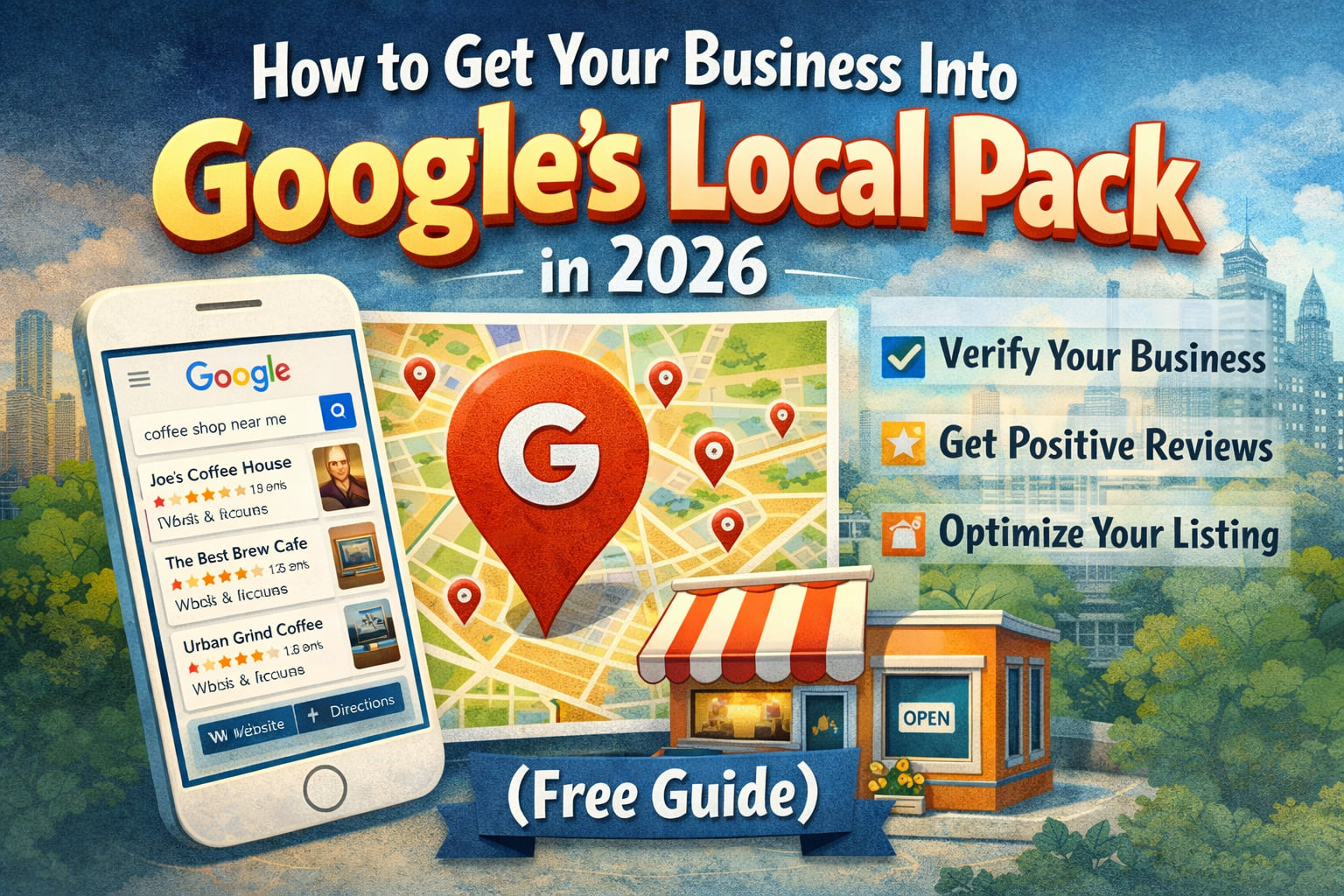
The Google Local Pack shows three local business listings at the top of search results — above every organic website result on the page. It includes a map, business names, star ratings, addresses, and phone numbers. It appears for location-based searches like "dentist near me" or "electrician in Chicago."
Here is what a Local Pack for "plumber near me" looks like — the three spots this guide helps you compete for:
| Position | Business | Rating |
|---|---|---|
| 1 | Best Plumbing Co. | ★ 4.9 · 47 reviews |
| 2 | City Plumbers | ★ 4.7 · 31 reviews |
| 3 | FastFix Plumbing | ★ 4.5 · 19 reviews |
Most businesses focus on ranking on page 1 of Google. The Local Pack sits above all page 1 results. A business in the Local Pack consistently outperforms a business ranked number 1 in traditional organic results for the same local search. As explained in local SEO vs traditional SEO, Local Pack visibility is achievable within weeks — traditional page 1 ranking takes years.
How Google Decides Who Gets Into the Local Pack
Google uses three factors to rank businesses in the Local Pack. Your entire strategy must address all three simultaneously to achieve and hold a top-3 position.
- Relevance: How closely your business matches the customer's search — driven by your category, description and listing content. Fully in your control.
- Proximity: How close your business is to the searcher. You cannot move your location, but you can clearly define your service area. Partly in your control.
- Prominence: How well-known and trusted your business is online — reviews, listings, citations and overall authority. The factor you can influence most directly.
Step 1 — Optimize Your Google Business Profile Completely
The Foundation of Every Local Pack Strategy. Your Google Business Profile is the foundation of every Local Pack strategy. Google pulls its Local Pack information directly from your profile. An incomplete profile almost never appears in the Local Pack — regardless of how long you have been in business.
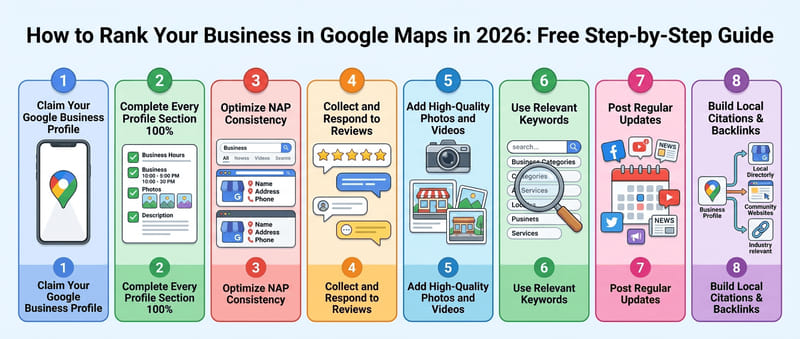
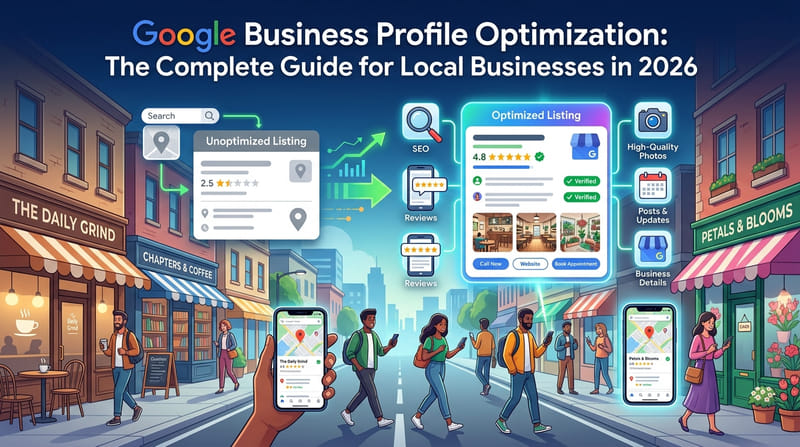
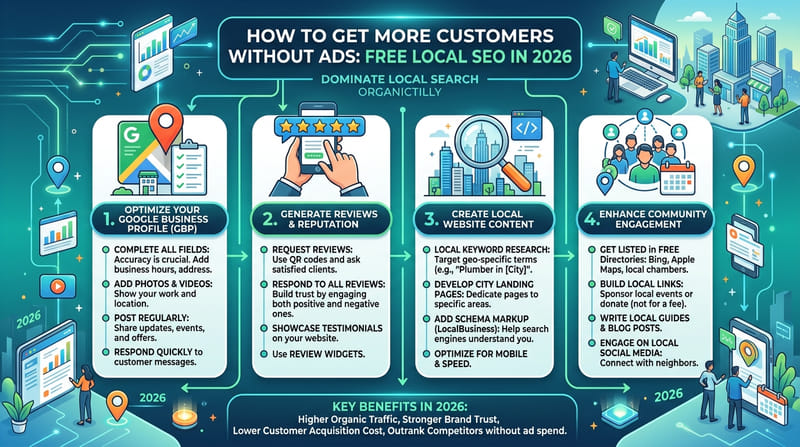
Claim your profile at Google Business Profile. Fill out every single field. Choose the most specific primary category available. Write a 150 to 200 word description mentioning your services and city naturally. Add at least 10 high-quality photos. Set accurate hours for every day of the week. As covered in detail in Google Business Profile optimization, complete profiles consistently outrank incomplete ones in the Local Pack.
Step 2 — Build Citations Across Multiple Directories
Citations Build the Prominence That Google Rewards. Citations are mentions of your business name, address, and phone number across the web. Google uses citations to verify your business location and measure your prominence. More consistent citations equals stronger Local Pack signals. Create your free listing on Listings Junkie immediately. Then work through the 10 best business listing sites in 2026 and get listed on every relevant platform. Aim for 15 to 20 quality directory listings within your first 30 days. This citation network sends a powerful combined signal to Google that your business is legitimate and prominent in your area.
NAP Consistency Is Non-Negotiable
Your business name, address, and phone number must match exactly across every platform. Even one inconsistency reduces Google's confidence in your business and directly weakens your Local Pack ranking. As explained in why NAP consistency matters for local rankings, this free fix has more impact on Local Pack visibility than most paid marketing strategies.
Step 3 — Collect Reviews Consistently
Reviews Are a Direct Local Pack Ranking Factor. Google measures both the number and quality of your reviews when deciding which three businesses to show. A business with 25 reviews almost always outranks a competitor with 3 reviews — even when everything else is equal. Ask every satisfied customer for a review immediately after a positive interaction. Send a direct link to remove all friction. Respond to every review within 48 hours. As shown in how to get 5-star reviews that bring more customers, consistent review collection is the fastest accelerator for Local Pack ranking improvement.
Review Velocity Matters as Much as Volume
Google values fresh reviews. A business collecting 5 new reviews per month outranks one with 50 old reviews and no recent activity. A steady stream of new reviews signals to Google that your business is active, trusted, and genuinely serving customers regularly — and that signal directly improves your Local Pack position.
Step 4 — Publish Google Posts Weekly
Activity Signals That Most Competitors Ignore. Google Posts are updates you publish directly on your Google Business Profile. Businesses that post regularly appear more active to Google's algorithm — and active businesses rank higher in the Local Pack. Publish at least one post per week. Share offers, news, helpful tips, or behind-the-scenes content. Keep posts under 200 words and always include a photo. This weekly habit is one of the simplest and most overlooked Local Pack optimization strategies available — and most of your competitors are not doing it.
Step 5 — Add Location Keywords Naturally
Give Google the Location Signals It Needs to Show You. Google needs clear location signals to show your business in Local Pack results for specific areas. Mention your city, neighborhood, and service area naturally throughout your Google Business Profile description and your website content. Include phrases like "serving [your city]," "[your service] in [your neighborhood]" and "available across [your area]." Write naturally for your customer first — Google picks up these location signals and uses them to match your business with nearby customer searches. If you serve multiple areas, mention each one specifically in your service area settings on Google Business Profile.
Step 6 — Optimize for Mobile
Most Local Searches Happen on a Phone. Google uses mobile experience as a ranking signal for Local Pack results. A slow or poorly designed mobile website directly hurts your Local Pack ranking — even when all other optimization is in place. Make sure your website loads in under 3 seconds on mobile. Ensure your phone number is tap-to-call. Make your address link directly to Google Maps. Follow the complete business listing checklist to make sure every element of your presence supports your Local Pack strategy.
How Long Does It Take to Get Into the Local Pack?
- 30 to 60 days — first appearances: Long-tail and low-competition local searches. Profile indexing and first citation signals visible.
- 60 to 90 days — growing visibility: Regular Local Pack appearances for secondary keywords. Review base building and citations compounding.
- 3 to 6 months — consistent top 3: Stable top-3 positions for primary service keywords in your area. Consistent inquiries from Local Pack.
As explained in how long does local SEO take to work, the speed of your results depends heavily on consistency. Businesses that apply all six steps simultaneously see results significantly faster than those implementing them one at a time. Businesses that stop and start never reach the Local Pack — those that work consistently almost always get there.
List your business for free
Create a verified listing on Listings Junkie and give the customers in your area one more place to find your business name, address, phone and website.