
Something unusual started happening to local businesses across the USA in early 2026. Their Google Business Profile rankings stayed the same. Star ratings were unchanged. Listing information was complete and accurate. But their inbound call volume dropped noticeably. Some saw a 30% decline. Others reported losing far more of their map pack calls within a few months. None of them had changed anything.
The cause was not something they did. Google changed the map pack itself. Understanding what changed and how to recover that lost call volume means looking at three shifts that hit local search at the same time.
The Three Changes That Are Killing Your GBP Calls
No single update caused this problem. Three separate changes converged in 2026. Together, they fundamentally altered how customers interact with local search results on mobile. Each change alone would have been manageable. Combined, they represent the most significant structural shift in local search since the map pack was introduced.
Change 1: Google removed the call button from organic map results
The impact of removing a single tap from the customer journey is larger than most business owners expect. Every extra step in a mobile flow loses some of the people who started it. For urgent local searches like "emergency plumber near me" or "dentist open now," where the customer's tolerance for friction is extremely low, that additional tap eliminates a significant share of calls before they happen.
Change 2: Paid ads now occupy map pack space
The second shift is the rapid expansion of paid placements inside the local map pack. Sterling Sky's tracking data shows that in early 2025, paid ads appeared inside mobile local packs on roughly 1% of tracked queries. By late 2025, that figure reached 22%. The trend has continued through 2026. Organic map pack results that previously held positions one, two, and three now frequently appear below one or two paid placements.
Furthermore, Local Services Ads saw an equally dramatic rise. Sterling Sky data shows LSAs appeared on approximately 11% of tracked queries at the start of 2025. By November 2025, that figure reached 31%. A business ranking organically in position one of the map pack is increasingly not the first result a customer sees on mobile. Paid results occupy the top of screen, and organic listings sit below them.
Change 3: AI local packs surface fewer businesses
The combination of these three changes explains why a business can hold its ranking position while simultaneously losing call volume. Ranking has not changed. The environment surrounding that ranking has changed completely. The businesses most affected are those that relied heavily on the tap-to-call functionality as their primary lead generation mechanism from local search.
Which Businesses Are Most Affected
Not every local business category has seen the same level of call decline. The sharpest drops concentrate in categories where customers historically converted through tap-to-call at very high rates.
Data from Lifted Websites analyzing Phoenix and Scottsdale markets identifies three categories with the steepest call drops. HVAC businesses are most severely affected because emergency searches historically converted at over 60% on map pack tap-to-call. Personal injury law firms face significant impact because high-cost-per-click keywords already pushed competitors toward Local Services Ads. Dental and urgent care practices see sharp drops because patients searching for immediate appointments want zero friction in reaching a provider.
Categories With Lower Impact
Businesses where customers typically research before calling are less immediately affected. Restaurants, retail stores, and planned-purchase service businesses see smaller call volume declines because their customers were already clicking into profiles before deciding to contact. The tap-to-call removal matters most where urgency was driving instant conversions without any intermediate research step.
Five Ways to Recover Your Call Volume
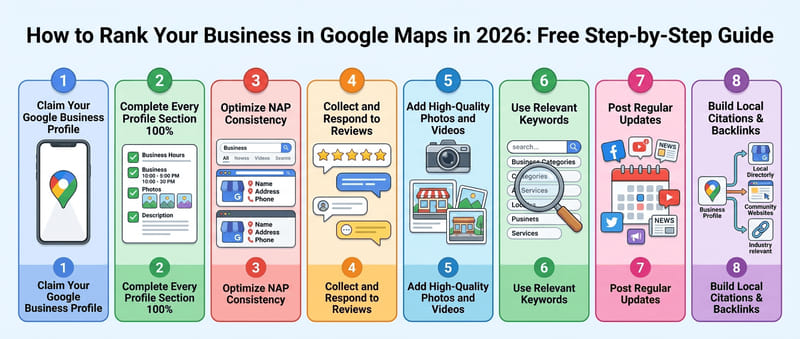
The call button is gone from the organic map pack. That is not reversible. What is recoverable is the call volume itself, through a combination of profile optimization, platform diversification, and conversion improvement inside the listing that customers now must click into before calling.
1. Make your phone number the first thing visible inside your profile
Since customers must now click into your listing before calling, the profile itself becomes the conversion point. Your phone number should be prominent, accurate, and formatted for mobile tap-to-call. Check your GBP right now and confirm the number displays correctly on mobile. Many businesses have formatting issues that create additional friction at exactly the moment a customer has navigated into the profile ready to call.
2. Add your phone number to every directory listing you own
Platform diversification is the most effective structural response to Google's call button removal. Apple Business Connect, Bing Places, Yelp, and quality business directories like Listings Junkie all generate real call volume independently of Google's map pack. Building a complete presence across reputable platforms means a single Google policy change cannot determine your monthly call volume. Start with the most effective business listing sites in 2026 and make sure your phone number is accurate and tap-to-call enabled on every one.
3. Strengthen your profile so customers click in more readily
In a higher-friction map pack, the quality of your visible listing information determines whether a customer clicks in at all. Your business name, primary category, star rating, and photo quality are all visible before the click. A business with a compelling photo, a strong star rating, and a clear category description earns the click more consistently than one with a blurry logo and sparse information. As explained in the complete listing optimization checklist, each element of your visible profile affects the click-through rate that now precedes every call.
4. Build review volume to earn the click over competitors
Social proof has become the primary differentiating factor at the moment a customer decides which business to click into from the map pack. Analysis of post-2026 map pack behavior shows a business with 247 reviews at 4.8 stars consistently beats a 4.9-star competitor with fewer reviews for click-through. Total review count now influences the click that must happen before the call. Consistent new reviews signal an active business rather than a dormant one.
5. Optimize for AI Overview citations to bypass the map pack entirely
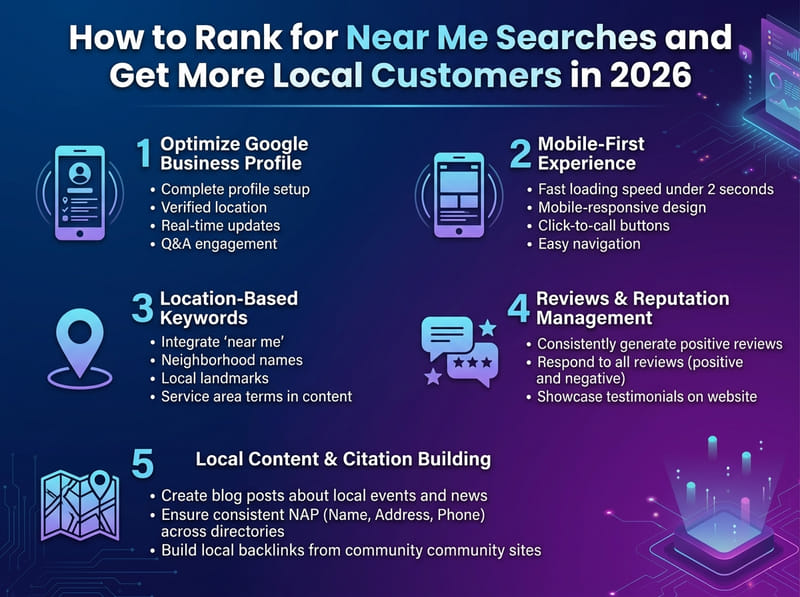
AI Overviews increasingly answer local queries before the map pack appears. A business cited in an AI Overview generates direct traffic and calls without relying on the map pack at all. The signals that earn AI citations are the same as strong local SEO fundamentals: complete GBP, consistent NAP across directories, strong review history, and structured website content that answers customer questions. Businesses that build these foundations now position themselves above the map pack friction problem entirely.
The Before and After of Local Search in 2026
Before 2026: how calls happened
Customer searched. Saw map pack. Tapped Call Now directly. Call connected in one step. Zero profile visit required. Tap-to-call conversion rate was extremely high for urgent searches.
2026 reality: how calls happen now
Customer searched. Saw paid ads above organic. Tapped into organic profile. Scrolled to find phone number. Tapped to call. Two extra steps now required before every call completes.
The Broader Lesson for Local Business Visibility
The GBP call button removal is a clear demonstration of a risk that local SEO experts have warned about for years. Building your entire customer acquisition strategy around a single platform feature is structurally fragile. When Google changes that feature, your revenue changes with it overnight.
That diversification reaches further than most owners realize. Directories, maps apps and data aggregators such as Neustar Localeze feed business details to many of the places customers search.
The businesses recovering fastest from the call decline are the ones treating this as a catalyst for platform diversification rather than a problem to solve within Google alone. They are building listing presence across Apple Business Connect, Bing, Yelp and quality directories. They are optimizing for AI Overview citation. They are focusing on review velocity to improve the click-through rates that now precede every call from the map pack.
List your business for free
Create a verified listing on Listings Junkie and give the customers in your area one more place to find your business name, address, phone and website.