
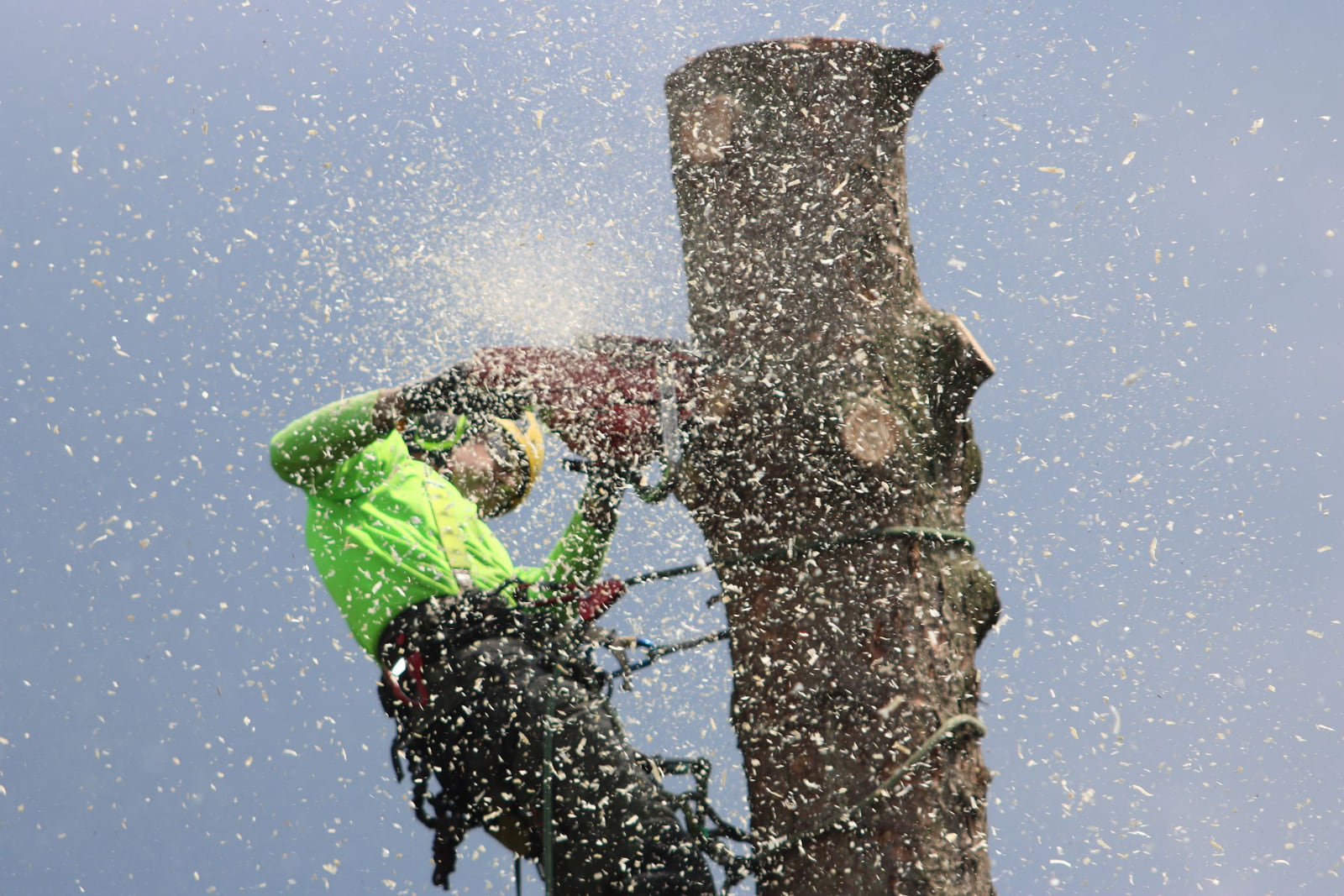
The leaves are coming down, and for the first time all year you can see the bones of the trees around your house. That makes fall the best time to look hard at them. Tree removal before winter is calmer, safer and usually easier to schedule than emergency work after an ice storm drops a limb on your roof. Here is how to spot a tree that may be a problem, and how to hire a crew that will handle it properly.
Why tree removal before winter beats waiting for a storm
Winter puts a different kind of stress on trees. Snow and ice add weight to branches, frozen ground can loosen its grip on shallow roots, and winter winds find every weak spot. A tree that has been slowly failing for years often picks the worst night of the season to finally give way.
Planning the work in fall has real advantages:
- You choose the timing. After a big storm, every tree service in the area is booked with emergencies, and you take whatever opening you can get.
- Bare branches are easier to read. With the leaves gone, you and an arborist can see deadwood, cracks and bad structure that were hidden all summer.
- Many trees are heading into dormancy. Late fall and winter are a common time for pruning and removal work, and crews can often protect lawns and beds better when plants are resting.
- You avoid paying emergency rates. Pricing varies a lot by area and by job, but planned work is rarely more expensive than a middle-of-the-night call.
Warning signs of a risky tree
You don't need to be an expert to notice trouble. Walk your yard with these in mind, and look at any tree tall enough to reach your house, your driveway, a fence, a play area or the street.
Dead or hanging branches
Large dead limbs are brittle and can drop with no warning. Broken branches caught in the canopy, sometimes called hangers, are a serious hazard because they can fall long after the storm that broke them.
Cracks, splits and weak forks
Look for deep cracks in the trunk or in large limbs. Pay special attention to trunks that split into two big stems in a tight V shape. Those unions can be weak, and a crack running down from the fork is a red flag.
A new or worsening lean
Many trees grow with a gentle lean and stay that way for decades. What matters is change. If a tree has started leaning recently, or the soil on one side looks lifted or cracked, the roots may be failing.
Rot, cavities and mushrooms
Mushrooms or shelf-like fungus growing at the base or on the trunk can be a sign of decay inside. So can soft, crumbly wood, large cavities or sections of missing bark.
Root damage and construction
A trench for a new sidewalk, a driveway expansion or a utility line can cut through roots on one side of a tree. The tree may look fine for a year or two and then decline. If there was digging near a big tree recently, mention it to whoever inspects it.
Branches near power lines
If limbs are touching or close to power lines, do not try to trim them yourself and do not let anyone without the right training near them. Call your utility company first. Many utilities handle clearance around their lines, and they can tell you what is theirs to deal with and what is yours.
None of these signs means a tree must come down. Some trees can be saved with pruning, cabling or simply removing one bad limb. That decision belongs to someone who does this work for a living.
How to hire the right tree service
Tree work is one of the riskier jobs a homeowner can hire out. A crew is working at height with chainsaws and heavy wood over your house, so the questions you ask matter more than usual.
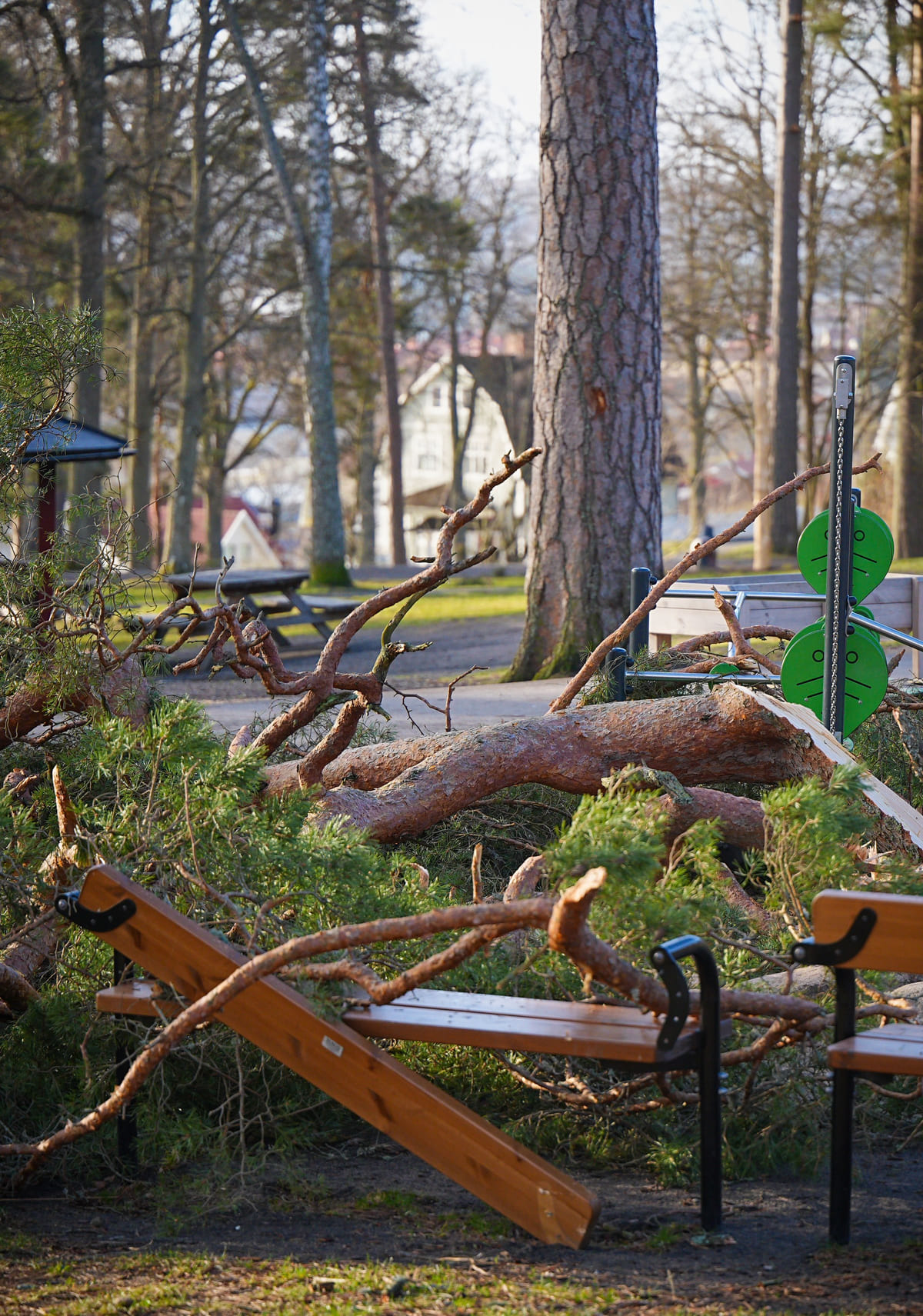
Ask for proof of insurance
Ask for a certificate of insurance showing liability coverage, and ask whether the company carries workers' compensation for its crew. If an uninsured worker is hurt on your property, or an uninsured crew drops a tree on your neighbor's garage, you do not want to find out the hard way who pays. A good company sends the certificate without fuss.
Check for an arborist
An arborist is trained in tree biology and care. Credentials such as certification from the International Society of Arboriculture show that someone has passed an exam and keeps up with continuing education. Not every crew member needs it, but having a certified arborist assess a questionable tree can be the difference between removing it and saving it. Some states and cities also license tree work, so ask what applies where you live.
Get the job in writing
A clear written estimate should say:
- Which trees or limbs are coming down, and how.
- Whether the stump will be ground, and how deep.
- What happens to the wood, chips and debris: hauled away, left as firewood or chipped on site.
- How your lawn, beds, fences and driveway will be protected.
- Who handles any permit the city requires.
If stump grinding is part of the job, the crew should call 811 before digging so underground utility lines can be marked. You can ask whether they will.
Compare more than price
Get two or three quotes for anything bigger than a small trim. Prices vary by tree size, access, how close the tree is to your house and how the wood has to come down. A much lower quote may mean a smaller crew, no insurance or a plan that skips cleanup. Our guide to getting a fair quote from local pros walks through how to compare bids line by line.
Be wary of door knockers after a storm
After big storms, crews sometimes go door to door offering fast, cash-only removal. Some are fine. Others are not insured, demand large payments up front or leave half the job undone. Take a business card, look the company up, and use the same checks you would for anyone else. Our article on how to spot fake reviews before you hire helps when you check them online.
Finding tree services on Listings Junkie
You can browse tree service companies on Listings Junkie by state, or look at a state page such as tree services in California or Georgia. Every listing is checked before it goes live, and reviews are confirmed by email.
A few examples of how companies describe themselves:
- AAA Tree & Landscaping in Springfield, Missouri, lists tree removal, stump grinding, trimming and 24/7 emergency tree services, and says it works with certified arborists.
- Harper's Tree and Stump Removal in Georgia describes itself as family-owned with over 30 years of experience, specializing in tree and stump removal.
- AAA Tree Experts in Charlotte notes that even healthy trees sometimes need to come down, such as trees leaning over a home.
Read each company's description, look at what services they name and where they work, then call two or three and ask the questions above. Some landscaping companies also handle tree work, so the landscaping and lawn care category is worth a look too.
Get your yard ready for the rest of winter
Trees are one piece of winter prep. Gutters full of leaves, a furnace that hasn't been checked and pipes in unheated spaces all cause their own cold-weather headaches. Our guide to getting a home ready for winter covers which pros to call and when, and much of it applies well beyond Chicago. If a storm does damage your roof, read how to hire a roofer after storm damage before you sign anything.
Frequently asked questions
Is fall a good time to remove a tree?
For many trees and many parts of the country, yes. Bare branches make problems easier to see, and you can schedule the work before winter storms add risk. An arborist can tell you if a particular tree is better handled at another time.
Can a leaning tree be saved?
Sometimes. A tree that has leaned the same way for years may be stable. A new lean, lifted soil or cracked roots is more serious. Have a certified arborist look at it before deciding.
Who is responsible for a tree near power lines?
Call your utility company first. They can tell you whether trimming near their lines is their job, and you should never trim near power lines yourself.
Does tree removal include the stump?
Not always. Many quotes cover cutting the tree down and hauling the wood, with stump grinding as a separate line. Ask, and get it in writing.
Do I need a permit to remove a tree?
It depends on where you live. Some cities protect certain species or sizes of trees, and some neighborhoods have their own rules. Ask the tree service and check with your city before work starts.
List your business for free
Create a verified listing on Listings Junkie and give the customers in your area one more place to find your business name, address, phone and website.