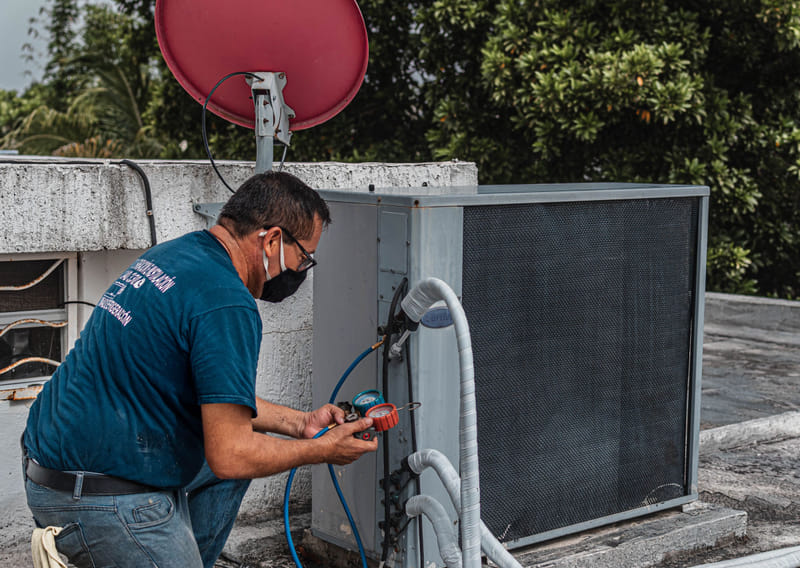
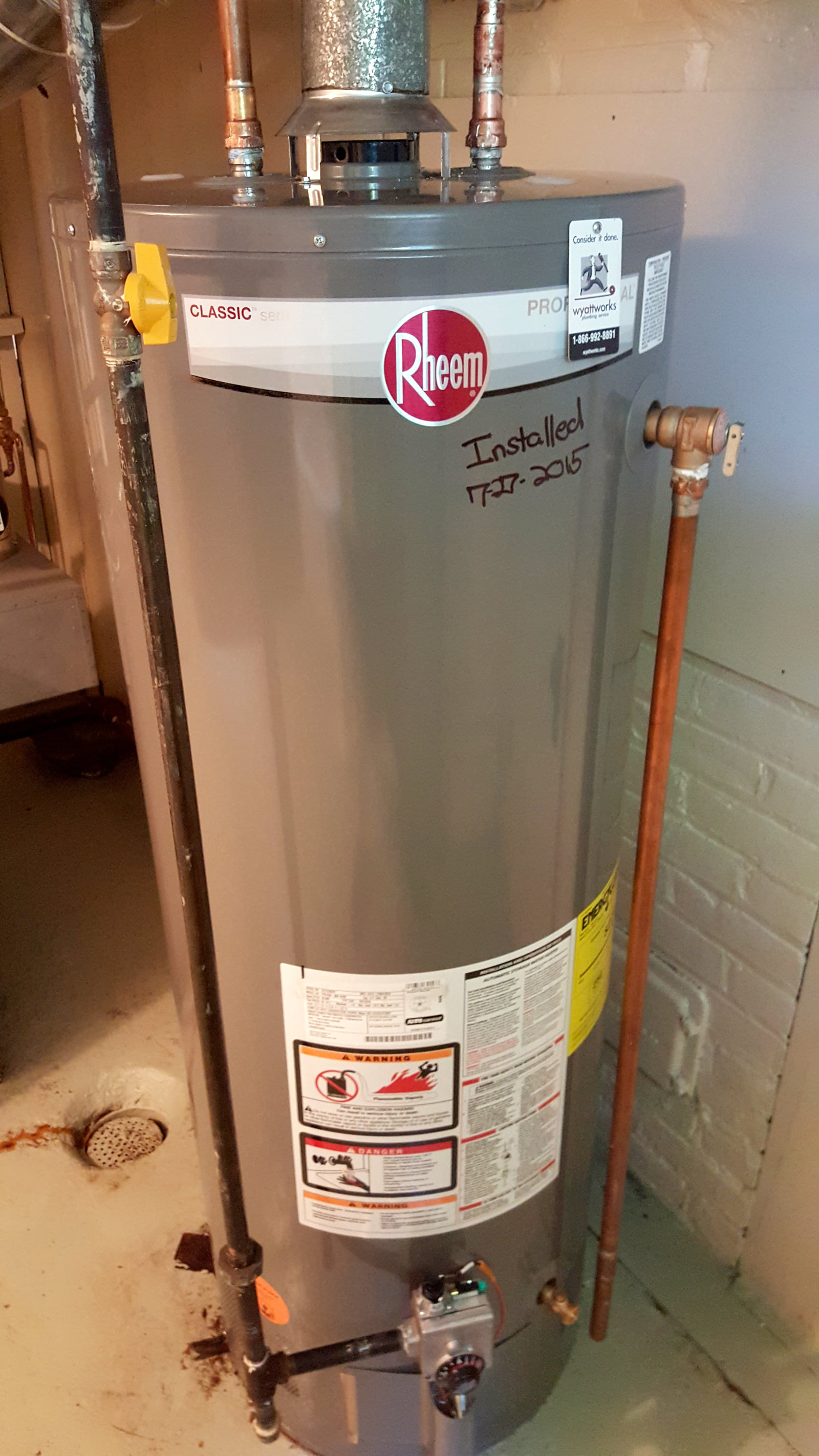
Nothing ends a winter morning faster than a cold shower. January is hard on water heaters: the water coming into the house is at its coldest, the holidays may have added extra guests, and an older unit that limped through the fall finally gives up. Once you're past the first shock, the big question is whether to repair or replace. Here's how to make the water heater repair or replace decision with a clear head, and what to ask the plumber before you spend a dollar.
First, make sure it's really the water heater
A few quick checks can save you a service call.
- Gas water heater: Look through the viewing window for the pilot or burner. If the pilot is out, follow the relighting instructions on the unit's label. If you smell gas at any point, stop, leave the house, and call your gas utility or 911 from outside.
- Electric water heater: Check the breaker panel for a tripped breaker. Some units also have a reset button behind a cover panel. If it trips again, stop and call a plumber, because something is causing it.
- Thermostat setting: Make sure nobody turned the dial down.
- Demand: If the house was full of holiday guests, you may have simply run the tank dry. Give it time to recover.
Leave anything involving the gas valve, wiring or a leaking relief valve to a pro.
Water heater problems that are often worth repairing
Plenty of water heater issues come down to a single part, and on a unit that's not too old, replacing that part can make good sense.
- Electric units: A failed heating element or thermostat is a common cause of lukewarm or no hot water, and both can usually be replaced.
- Gas units: Pilot assemblies, thermocouples, igniters and flame sensors can wear out. A gas control valve is a bigger repair but still sometimes worth it on a younger tank.
- Relief valve trouble: A temperature and pressure relief valve that drips or won't seat properly can usually be replaced.
- Sediment: Rumbling or popping often means sediment on the bottom of the tank. A flush may help, especially if it's caught early.
- Anode rod: This sacrificial rod inside the tank protects it from corrosion. Replacing a spent rod can help extend a tank's life.
- Tankless units: Many problems come from mineral scale. Descaling, cleaning filters or replacing a sensor often gets them running again.
Signs it's time to replace your water heater
Some problems mean the unit is at the end of the road.
- The tank itself is leaking. A leak from a fitting or valve can often be fixed. Water seeping from the tank body usually can't.
- Rusty hot water. If only the hot water is discolored, the inside of the tank may be corroding. A plumber can help tell whether it's the tank or the pipes.
- Age. Many tank water heaters last somewhere around 8 to 12 years, depending on water quality, use and maintenance. The manufacture date is usually on the label or coded in the serial number, and a plumber can read it for you.
- Repairs keep stacking up. A second or third repair in a short span is a sign the unit is wearing out.
- It no longer fits your household. A new baby, a teenager who takes long showers, or an added bathroom can outgrow an old tank.
Water heater repair or replace: decide by age, cost and condition
Put three facts side by side: how old the unit is, what the repair costs, and what a replacement would cost. A common rule of thumb is that when a unit is near the end of its typical life and the repair would be a big share of the replacement price, replacing usually makes more sense. On a younger unit with a simple failed part, repair often wins.
Ask your plumber to put both options in writing so you can compare without pressure. Costs vary by area, fuel type and the work your home needs, so if the numbers are large, a second opinion is reasonable.
If you replace: tank, tankless or heat pump?
Traditional tank
Usually the lowest upfront cost and the simplest swap. The main decision is size, based on how many people live in the home and how much hot water you use at once.
Tankless
Heats water on demand, takes up less space, and can last longer with regular descaling. The upfront cost is often higher, and switching from a tank may require changes to the gas line, venting or electrical service. Some plumbers specialize in this kind of change. Certified Plumbing Solutions, listed on Listings Junkie, names tank-to-tankless conversions and water heater installation among its services in Palm Beach County, Florida.
Heat pump water heater
These pull heat from the surrounding air and can be very efficient. They need enough space and work best in areas that stay reasonably warm, like a garage in a mild climate. Upfront costs tend to be higher, but there may be utility rebates or tax credits available. Check with your utility, and talk to a tax professional about whether any credit applies to you.
Whatever you choose, many areas require a permit for water heater replacement, and current code may call for upgrades such as an expansion tank, new venting, or seismic straps in some regions.
Questions to ask your plumber
Is this repairable, and what would each option cost in writing?
How old is the unit, and what condition is the tank in?
What size do we actually need?
Is a permit required, and will you pull it?
What's included: removal of the old unit, new valves and connectors, code updates?
What warranty comes with the unit, and what do you guarantee on labor?
How soon can you do it?
Finding a plumber for water heater work
Browse the plumbers category on Listings Junkie, or go to your state page, such as plumbers in Florida, Texas or Mississippi. Streamline Plumbing & Septic in New Albany, Mississippi, for example, is listed with water heater installation and repair alongside drain, sewer and septic work.
For the basics on licensing, insurance and written estimates, see how to choose a plumber you can trust. And if the cold snap is hitting your pipes too, our guide to frozen pipes covers prevention and what to do if a line bursts.
Frequently asked questions
How long do water heaters usually last?
Many tank units last around 8 to 12 years, and tankless units can last longer with regular maintenance. Water quality, use and upkeep all make a difference.
Is a leaking water heater an emergency?
It can be. Turn off the cold water supply to the heater and shut off its power or gas, then call a plumber. A small drip from a fitting is less urgent than water pooling from the tank.
Can I replace a water heater myself?
Many areas require a permit, and gas lines, venting and electrical connections carry real safety risks. Most homeowners are better off hiring a licensed plumber.
Why does my water heater make popping or rumbling noises?
That's often sediment that has settled on the bottom of the tank. Flushing may help, but on an older unit it can also be a sign the tank is wearing out.
List your business for free
Create a verified listing on Listings Junkie and give the customers in your area one more place to find your business name, address, phone and website.